When the ancients spoke
Abraham & Timothy
Faith carried across generations, and what it means to inherit someone else's trust in God
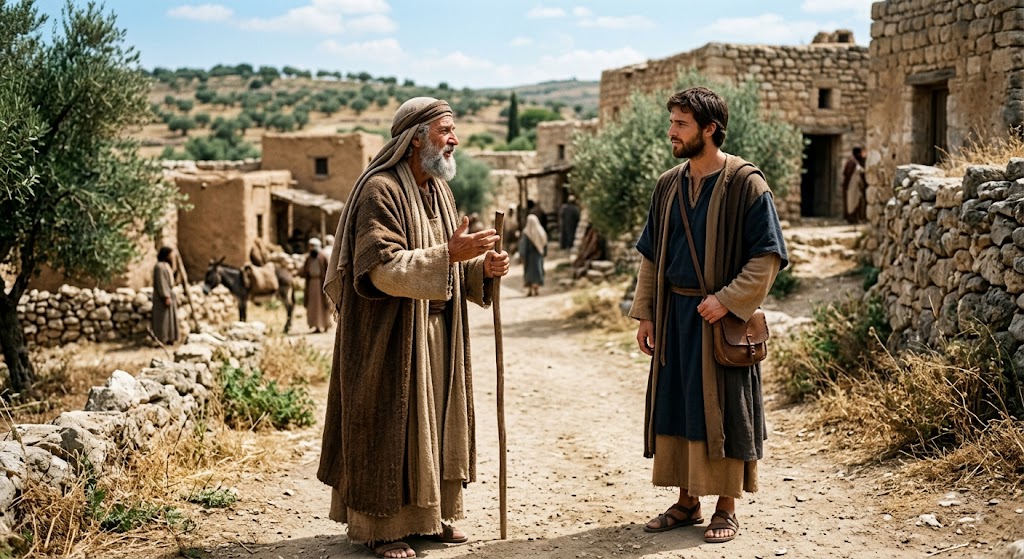
A dusty road outside an unnamed city, somewhere between departure and arrival, where the light falls long and golden and neither man seems in a hurry.
Abraham: I left everything once — my father's house, the names I had grown up trusting, even the shape of my future — and the only thing I carried was a word I could not prove.
Timothy: I think I know something of that, though mine came differently. I didn't step out into the unknown so much as I was handed a torch by people who had already walked through the dark. My grandmother Lois, my mother Eunice — their faith came to me like an inheritance I hadn't earned.
Abraham: And did that make it feel less yours?
Timothy: For a long time, yes. Paul would urge me to stir it up, as though it had settled at the bottom of something. I wondered whether faith passed down was truly faith at all, or only a borrowed warmth.
The road bends slightly, and a fig tree throws its shade across the stones at their feet.
Abraham: I was not born knowing. I was called, and I went — but called into what, I could not have said. The covenant came in pieces. The promise about my son came when my wife and I had long since stopped expecting. Each step was its own act of trust, and each one also inherited something from the last. Even my faith built on itself. What makes you think yours is different because it began with someone else's yes?
Timothy: I suppose I thought faith had to begin in fire — in some great rupture from before.
Abraham: Mine did rupture. But the fire was not the faith. The fire was only the circumstance. The faith was the walking, year after year, without the destination in hand. You have been walking too, Timothy, even if you do not remember the first step, because someone else took it for you.
Timothy: And that is grace, not deficit.
Abraham: That is exactly what it is. My children inherited a promise they did not earn either. I held it for them before they existed. Someone always holds it first.
Timothy: Then I am not at the end of a chain. I am somewhere in the middle of one.
Abraham: We all are.
When the ancients spoke on borrowed roads, they reminded one another that faith is not a private invention but a living thread — passed hand to trembling hand across the dark.
Abraham and Timothy together reveal that inherited faith is not secondhand faith, but a trust already proven, placed into new hands to carry further than those before them could go.
Faith carried across generations, and what it means to inherit someone else's trust in God
A dusty road outside an unnamed city, somewhere between departure and arrival, where the light falls long and golden and neither man seems in a hurry.
Abraham: I left everything once — my father's house, the names I had grown up trusting, even the shape of my future — and the only thing I carried was a word I could not prove.
Timothy: I think I know something of that, though mine came differently. I didn't step out into the unknown so much as I was handed a torch by people who had already walked through the dark. My grandmother Lois, my mother Eunice — their faith came to me like an inheritance I hadn't earned.
Abraham: And did that make it feel less yours?
Timothy: For a long time, yes. Paul would urge me to stir it up, as though it had settled at the bottom of something. I wondered whether faith passed down was truly faith at all, or only a borrowed warmth.
The road bends slightly, and a fig tree throws its shade across the stones at their feet.
Abraham: I was not born knowing. I was called, and I went — but called into what, I could not have said. The covenant came in pieces. The promise about my son came when my wife and I had long since stopped expecting. Each step was its own act of trust, and each one also inherited something from the last. Even my faith built on itself. What makes you think yours is different because it began with someone else's yes?
Timothy: I suppose I thought faith had to begin in fire — in some great rupture from before.
Abraham: Mine did rupture. But the fire was not the faith. The fire was only the circumstance. The faith was the walking, year after year, without the destination in hand. You have been walking too, Timothy, even if you do not remember the first step, because someone else took it for you.
Timothy: And that is grace, not deficit.
Abraham: That is exactly what it is. My children inherited a promise they did not earn either. I held it for them before they existed. Someone always holds it first.
Timothy: Then I am not at the end of a chain. I am somewhere in the middle of one.
Abraham: We all are.
When the ancients spoke on borrowed roads, they reminded one another that faith is not a private invention but a living thread — passed hand to trembling hand across the dark.
Abraham and Timothy together reveal that inherited faith is not secondhand faith, but a trust already proven, placed into new hands to carry further than those before them could go.