When we rename what God has already named, we are attempting to seize moral authority and redefine truth according to human desire rather than divine decree. This act of spiritual pride leads to a distorted reality and separation from God, mirroring the original pattern of rebellion described in Genesis 3.
We often feel an underlying exhaustion that stems from the constant pressure to define our own reality. We spend our days rebranding our failures as growth and our isolation as independence; yet, this mental labor rarely leads to lasting peace. This habit of renaming what God has already defined is not a modern innovation. It is a pattern that began in the Garden of Eden. When we move from receiving truth to deciding truth, we step out of our role as stewards and into the role of self-appointed sovereigns. In this reflection, we will examine the subtle shifts in language found in Genesis 3 and explore the modern patterns of renaming reality. You will discover how returning to God’s original names for your life offers a clarity that no self-made definition can ever provide.
The Power of a Name: Authority in the Garden
In the opening chapters of Genesis, language is more than a tool for communication; it is a mechanism of creation and governance. For the ancient Hebrew mind, the act of naming was an exercise of authority and ownership. To name a thing was to define its essence, its purpose, and its place within the cosmic order. This was not a casual assignment of labels, but a declaration of what a thing truly was in its core.
We see this first in God’s own creative acts. He calls the light Day and the darkness Night. He names the expanse Heaven and the dry land Earth. By doing so, He establishes the parameters of reality itself. When God later invites Adam to name the living creatures in Genesis 2, He is inviting humanity into a subordinate partnership. Adam’s task was to discern the nature of each animal and speak a name that aligned with its God-given identity. In this original design, there was a profound peace because there was a clear order. Reality was a gift to be received, not a product to be manufactured.
However, the spiritual weight of our choices changes when we rename what God has already named. When we move from receiving reality to attempting to redefine it, we step out of stewardship and into a self-appointed sovereignty. This shift is a core focus of the spiritual care we provide here at the chapel. Whether during a Chaplain Chat or in private reflection, returning to God’s original definitions is often the first step toward internal quiet. In the garden, the one who names is the one who defines the nature of the thing, and for a time, humanity was content to live within the beautiful definitions God provided.
The Subtle Shift: Eve and the Tree in Genesis 3
The disruption of the Garden’s peace began not with a violent act, but with a conversation about definitions. The Serpent’s strategy was to move Eve from a posture of receiving truth to a position of evaluating it. In Genesis 3, we see the first instance of a human being assuming the role of the ultimate arbiter. The temptation was an invitation to step outside the safety of God’s boundaries and decide, independently, what is beneficial and what is harmful.
Central to this shift is the Hebrew word tob, translated as "good." Throughout the first chapter of Genesis, this word serves as a rhythmic refrain. God creates, and then God declares, "it was good." In that context, tob is an objective reality established by the Creator. Goodness was not a matter of opinion; it was a reflection of God’s own nature and intent. The world functioned in harmony because humanity accepted these divine assessments without reservation.
Everything changed in Genesis 3:6. The text records that the woman "saw that the tree was good for food." This phrasing is a deliberate, chilling echo of the creation account. The word tob is the same, but the source of the declaration has shifted. Eve looked at the one thing God had specifically designated as off-limits and, based on her own physical senses and intellectual desires, she reassessed its value. She took the authority to define reality into her own hands. This is the precise moment when we rename what God has already named. God had named the fruit of that tree as a source of death; Eve renamed it as "good."
This subtle shift from receiving to deciding is a core focus in spiritual care. It marks the transition from trust to autonomy. When we choose to judge God's Word rather than be judged by it, we enter a state of internal friction. Chaplain Mark often notes that much of our modern restlessness stems from this ancient habit of trying to overwrite God's definitions with our own temporary perceptions. By reclaiming the role of the one who names, we unknowingly trade the peace of the Garden for the burden of self-governance.
Receiving Truth vs. Deciding Truth
The distinction between receiving truth and deciding truth marks the difference between a life of peace and a life of constant, wearying negotiation. To receive truth is to adopt a posture of humility, recognizing that the Creator has already established the boundaries and definitions of the world. This requires trust; it is the quiet acknowledgement that God is both competent and kind in how He has ordered existence. Conversely, deciding truth is an act of displacement. It is the moment we step onto the throne, assuming the responsibility to determine for ourselves what is right, what is valuable, and what is real.
Temptation is rarely a loud, dramatic rebellion against the divine. Instead, it is most often a subtle shift in who gets to define reality. It happens in the private spaces of the mind when we rename what God has already named, trading His objective declarations for our subjective preferences. This shift can feel like a move toward freedom, but it actually introduces the heavy burden of naming. When we take it upon ourselves to define 'good' and 'evil,' we become the sole architects and defenders of our own moral universe.
This burden inevitably leads to the anxiety and shame we see in the immediate aftermath of the fall. If we are the ones who define our worth, our success, or our goodness, we are also the ones who must constantly sustain those definitions against a changing world. In the spiritual care we provide, we often see that the root of modern restlessness is this exhaustion from trying to maintain self-authored truths. Chaplain Mark notes that true relief begins only when we stop trying to be the ultimate judges of our reality. By moving back into the posture of a receiver, we are released from the impossible task of governing what only God can define.
The Modern Pattern of Renaming Reality
This ancient impulse to redefine reality did not end at the gates of Eden. Instead, it has become a sophisticated, daily practice in our modern lives. We often use language to sanitize our departures from God’s design, creating a version of truth that feels more comfortable but lacks the weight of reality. This linguistic shift allows us to bypass the conscience; if we can change the label, we can often silence the conviction that follows.
Consider how frequently we engage in this re-branding within our own hearts:
We rename greed as ambition. While God calls us to a life of stewardship and contentment, we reframe an insatiable thirst for more as a commendable drive for success or financial wisdom.
We rename isolation as independence. God’s design for human flourishing is rooted in community and mutual dependence, yet we often mask our fear of vulnerability by calling our loneliness a virtue of self-sufficiency.
We rename harshness as authenticity. We take the biblical call to speak truth in love and strip away the love, claiming we are simply being honest or telling it like it is, regardless of the damage our words cause.
This friction occurs when we rename what God has already named, trading His eternal standards for labels that serve our immediate desires. This practice creates a heavy, internal fatigue. It is exhausting to constantly maintain a self-authored identity that disagrees with the Creator’s assessment.
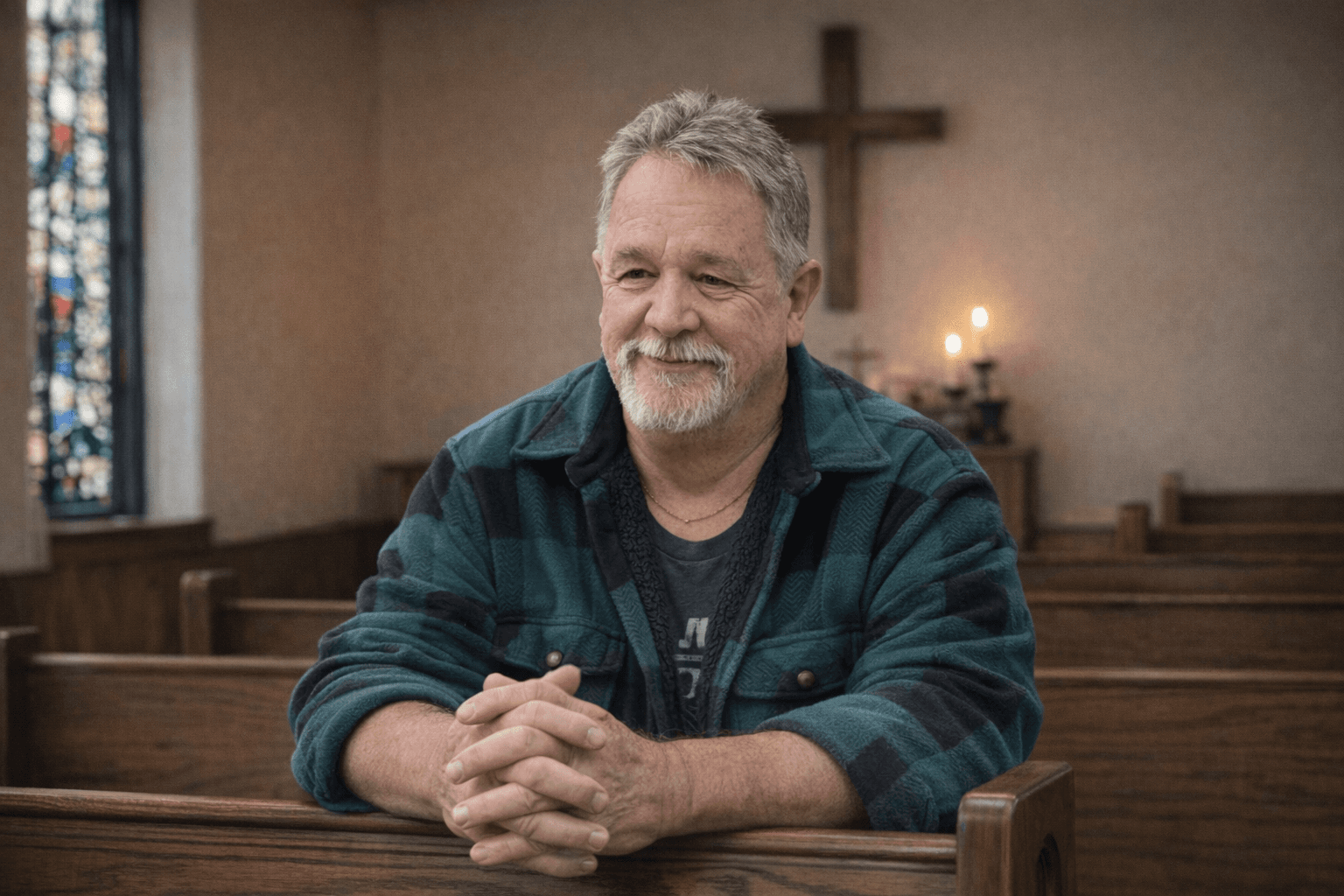
The mission of the spiritual care we offer is to provide a sanctuary where this work of renaming can finally stop. In a Chaplain Chat or a quiet moment of prayer, you are invited to lay down the burden of self-justification. Chaplain Mark provides a space to peel back the modern euphemisms and simply be present with God’s original definitions of who you are. Here, you are not defined by the titles you have manufactured or the traits you have rebranded, but by the fundamental truth that you are loved, created, and known.
Finding Peace in God's Original Names for You
We often carry names we never asked for. Labels like "disappointment," "unworthy," or "mistake" can settle deep into the identity, forming a crust over the soul. These are the heavy weights we carry when we rename what God has already named in our own lives. While we might look at our history and name it a failure, God looks at the complexity of our existence and speaks a different vocabulary. He uses words that do not shift with our performance or our mood.
In Scripture, God’s naming is an act of profound restoration. He calls you Beloved before you have done anything to earn the title. He names you Redeemed even while the fragments of your past feel irreparable. He identifies you as a Child, a title that grants you an inheritance of grace rather than a wage of effort. These names are not aspirational goals; they are foundational truths. They represent the original "good" that God declared over humanity in the beginning, a goodness that exists because He placed it there, not because we manufactured it.
Finding peace requires a deliberate pause to listen for these original names. To hear them, you must step away from the loud demands of self-definition. Try setting aside a few moments today for intentional silence. Do not use this time to plead for changes or to list your recent shortcomings. Instead, sit with the quiet intent to receive. Imagine the Creator looking at you, not through the lens of your perceived flaws, but through the lens of His original intent.
This process of stripping away false labels is the heartbeat of spiritual care. It is not about adding new achievements to your life, but about unlearning the lies you have adopted as truth. During a Chaplain Chat, Chaplain Mark helps you navigate this internal landscape, identifying where you have accepted names that God never gave you. By returning to His original naming, you find the only identity that is sturdy enough to hold the weight of your life.
Ultimately, reclaiming the original names and purposes God established for us is a vital step toward spiritual restoration. When we stop attempting to redefine truth on our own terms, we find a deeper sense of peace and alignment. If you feel overwhelmed by these personal shifts or want expert help navigating your journey, consider visiting the Chapel for support. We offer professional guidance to help you find clarity and steady your steps along the way.