Lens: toxic shame (younger son) and sibling envy/comparison injury (older son)Reading — Luke 15:11–32 The Prodigal Son Lens: toxic shame (younger son) and sibling envy/comparison injury (older son)
The Weight of Regret: A Human Look at the Prodigal Son
As I sit and read this story this morning, I’m reminded that none of us arrive where we are by accident. Every wound, every choice, every moment of grace — it all shapes the person who wakes up in our skin today. Luke’s telling of the Prodigal Son isn’t just a parable; it’s a mirror. And if we’re willing, we can look into it honestly.
Allow me to ask you to walk with me for a moment.
Picture the younger son. Not as a villain, not as a cautionary tale — but as someone swallowed up by toxic shame. Someone who has spent years trying to outrun the ache inside his own chest. Someone who chased validation in all the wrong places and came home empty‑handed. Shame has a way of convincing us we’re beyond love, beyond welcome, beyond repair.
And then life throws him a curve: an invitation. A wedding feast. A moment that forces him to face what he ran from. Suddenly he feels the weight of what he’s done — the debt, the hurt, the selfishness he tried to justify. Regret has a way of sitting heavy in the gut. It makes you wonder if forgiveness is even possible.
Now let’s look at the older brother — the one who stayed, the one who carried the load, the one who watched the family fracture. His wound is different. It’s the quiet injury of comparison, envy, and feeling unseen. He’s the one who did everything “right,” yet still feels overlooked. That ache is real. It’s human.
Imagine the prodigal sitting at the table, catching his brother’s eyes. Not hatred — just hurt. Disappointment. Confusion. And beneath it all, that old longing: I wish you loved me. I wish I hadn’t broken what we had. Shame and envy sit side by side in that room, each with its own story.
Look around the family table. Everyone carries something. The father’s longing. The older brother’s resentment. The younger son’s shame. The tension that settles into a family when wounds go unspoken.
But then something shifts.
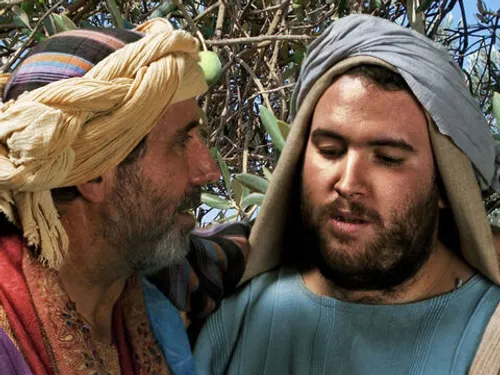
The older brother turns toward him. Not with open arms, not with perfect understanding — but with the simple recognition that he’s still human. Still family. Still someone worth looking at, not away from. The younger son doesn’t know the full story of his brother’s pain, and the older brother doesn’t know the full weight of his regret. But maybe, for the first time, they’re both trying. And sometimes trying is the first miracle.
This is the truth tucked inside the parable: none of us are perfect. We hurt each other. We misunderstand each other. We carry wounds we don’t know how to name. But we also have the choice — every day — to loosen our grip on bitterness, to soften our hearts, to forgive and be forgiven.
The Prodigal Son reminds us that our failures don’t define us. Shame doesn’t get the last word. Comparison doesn’t get the last word. The Father’s love does. And in that love, we find the courage to come home, the humility to admit our part, and the grace to let others come home too.
Prayer
Father, for every person crushed under toxic shame, for every heart weighed down by regret, for every soul tangled in comparison — breathe Your gentleness over them. Remind them that their story is not their worth. Teach us to forgive, to receive forgiveness, and to rest in the mercy that meets us on the road home. Amen.