Matthew 14:22-33
Lens: fear/panic response overriding faith once focus shifts
TITLE:* "Unleashing Faith in the Face of Fear: A Christian Psychological Perspective on Matthew 14:22-33"
Walk with me through this one...
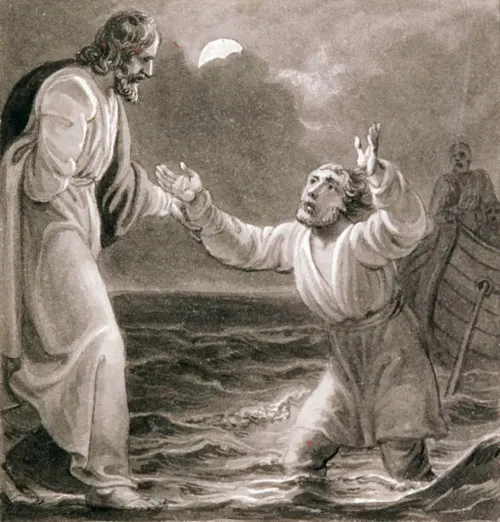
As we reflect on Matthew 14:22-33, we're invited to consider a pivotal moment in the life of Jesus that's often overlooked in our understanding of faith and fear. It's the story of Peter walking on the water, where he was instructed by Jesus to put his faith into action, yet ultimately fell into the sea.
For many of us, our experiences of faith and fear are deeply rooted in our personal struggles. We've all been there – feeling overwhelmed, anxious, and uncertain. But what happens when our focus shifts from the source of our faith to the external circumstances that trigger our fear response? How do we overcome the overriding fear response that can silence our faith?
Let's dive into the psychological lens of this story. On the surface, Peter's decision to walk on the water may seem like a bold, faith-filled move. But what if we consider the underlying psychological dynamics that may have driven his actions? As we examine the psychological responses that may have emerged, we can begin to see how fear and panic can override our faith.
When we're faced with a situation that makes us feel vulnerable or uncertain, our brains are wired to respond with fear. This response is designed to protect us from potential harm, but it can also paralyze us, causing us to freeze in our tracks and avoid taking action. In the context of faith, this fear response can manifest as a hesitation to put our trust in God, to take risks, or to stand on the rock of confidence that Jesus has given us.
In Peter's case, his fear response was likely fueled by his own doubts and uncertainties about his role in Jesus' ministry. He may have felt like he was not being called to the same level of leadership as the other apostles, or that he was not yet prepared for the challenges that lay ahead. These internal doubts and fears could have easily overridden his faith, causing him to become paralyzed and unsure of what to do next.
Yet, as we read in Matthew 14:22-33, Jesus shows us a different way. He instructs Peter to put his faith into action, to trust in God's provision and guidance, and to take the next step despite his fears. In this moment, Peter's faith is not overridden by fear, but rather, it's strengthened and confirmed.
As we reflect on this story, we're invited to consider our own experiences of faith and fear. How have we responded to uncertainty, doubt, and uncertainty? How have we overridden our faith with fear, panic, or anxiety? By examining these underlying psychological dynamics, we can begin to see how we can overcome our fear responses and strengthen our faith.
In the end, it's not about avoiding our fears or suppressing our doubts, but about learning to trust in God's sovereignty and provision, even when we can't see the way ahead. It's a matter of faith, not just faith, but living out our faith in the midst of uncertainty, and trusting that God is working in our lives, even when we can't see what's next.