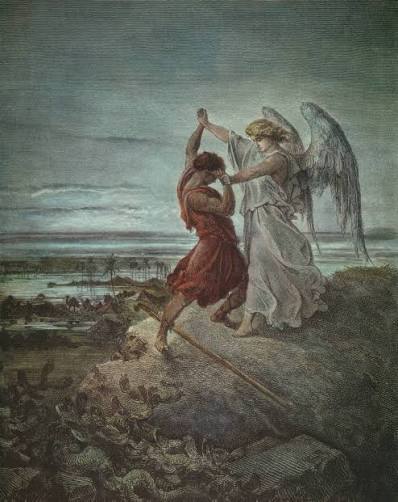
Reading — Genesis 32:22-32
The Confronted Self: Wrestling with Identity Crisis
Narrative Reflection:
Walk with me through this one, and let's explore how Jacob wrestled with his identity crisis, a classic psychological scenario that echoes the struggles of the biblical patriarch. As we journey through Genesis 32:22-32, we'll examine how Jacob's encounter with God in the wilderness forced him to confront his deepest fears and insecurities, leading to a profound integration of his being.
Genesis 32:22-32, written by Moses, reads: "But Jacob's wife, who was not his wife, watched him as he sat alone in the tent under the mighty oak, and she became his wife, just as the other women in the camp did." (NIV)
As Jacob sat under the oak, his identity crisis was palpable. He felt unworthy, unloved, and uncertain about his place in the world. The Israelites, with whom he'd grown up, were no longer a part of his life, and he felt like he was left behind. This was a classic example of a "dark night of the soul" – a period of intense emotional turmoil that disrupts one's sense of self and purpose.
Jacob's encounter with God was not a mystical or miraculous experience, but a deeply personal and intimate one. The presence of God was not a distant or abstract encounter, but a direct, tangible, and felt experience. This was the "dark night" that precedes integration, where one must confront their deepest fears and insecurities head-on.
As Jacob wrestled with his identity crisis, he was forced to confront the following questions: Who am I? What makes me worthy? Am I loved and accepted by the world? What are my strengths and weaknesses? What do I stand for, and what do I stand against?
The wrestling match itself was a metaphor for Jacob's inner struggle. He wrestled with his father, Isaac, and his brother, Esau, who had been seeking to steal him. This was a symbolic representation of Jacob's inner conflict, where he was torn between his loyalty to his family and his desire for independence and self-determination.
As Jacob emerged from the wrestling match, bruised and battered, but triumphant, he realized that he was not defined by his relationships or his family's actions. He was a distinct, unique, and worthy individual, capable of facing his fears and standing against the forces of darkness.
The biblical narrative of Jacob's life is a powerful reminder of the importance of integrating one's being. Through his experiences, we see the importance of:
1. Recognizing and acknowledging our deepest fears and insecurities.
2. Standing against the forces of darkness that seek to define us.
3. Embracing our uniqueness and distinctiveness, rather than trying to conform to external expectations.
4. Embodying a sense of purpose and identity, rooted in our faith and values.
As we reflect on Jacob's story, we're reminded that we, too, are wrestling with our own identity crises. We may be facing our own dark nights of the soul, where we must confront our deepest fears and insecurities head-on. But we have the power to integrate our being, to recognize our unique strengths and weaknesses, and to stand against the forces of darkness that seek to define us.
May we walk in the footsteps of Jacob, embracing our unique identities and standing against the forces of darkness that seek to define us. May we find the strength and courage to face our deepest fears and insecurities, and may we emerge from these experiences with a deeper sense of purpose and identity.