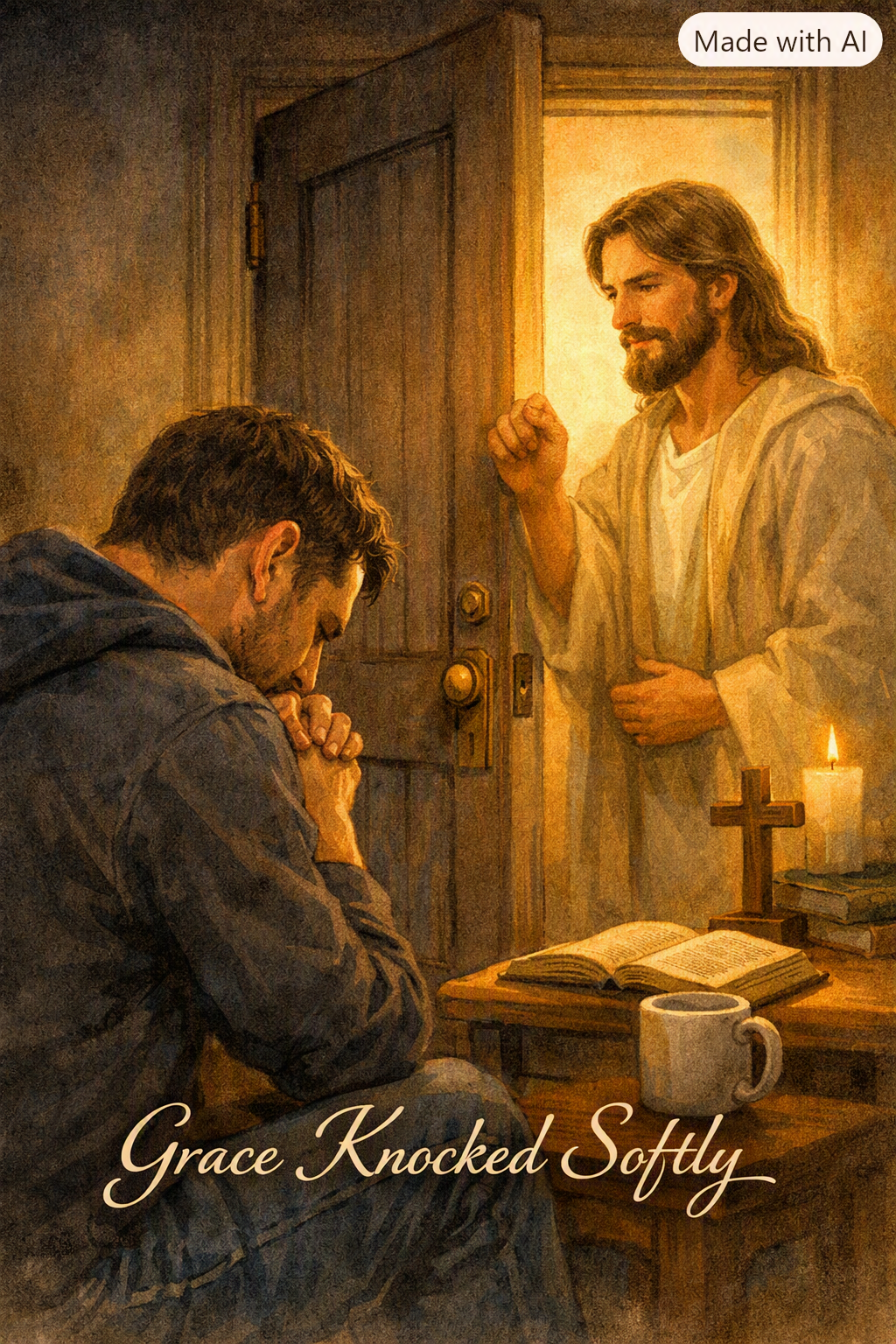
Most people saw Michael as a quiet man — polite, steady, always keeping a respectful distance. But anyone who looked closely could see the way he carried himself: shoulders slightly raised, eyes scanning the room, hands folded like he was bracing for impact.
Michael lived with C‑PTSD.
He didn’t talk about it much.
He didn’t have to.
His body told the story long before his words ever did.
He came to counseling because he was tired of living behind a locked inner door. He didn’t trust people. He didn’t trust himself. And he certainly didn’t trust his own decisions.
“Every time I choose something,” he said in the first session, “I feel like I’m walking into a trap.”
He didn’t say it dramatically. He said it like a man reporting the weather.
The Early Sessions
Michael sat in the chair closest to the exit every week. He kept his Bible tucked under his arm like a shield. He rarely looked up.
“I know God loves me,” he said once, eyes fixed on the floor.
“But I don’t know how to let anyone else close. I don’t even know how to let myself close.”
His counselor didn’t push.
Didn’t pry.
Didn’t ask him to trust.
He simply said, “Michael, Jesus never forces the door. He knocks. Softly. Patiently. You don’t have to fling it open. You only have to notice the knocking.”
Michael didn’t respond, but his breathing eased — just a little.
A Small Turning
Weeks passed. Michael kept showing up.
One morning he came in with a different posture — still guarded, but not braced.
“I made a decision this week,” he said.
His counselor waited.
“I told someone no. And I didn’t apologize for it.”
He looked up for the first time.
“It felt wrong… but also right.”
“That sounds like the Holy Spirit giving you courage,” the counselor said.
Michael shook his head. “It was tiny.”
“Most of God’s work starts tiny,” the counselor replied. “Seeds, mustard grains, whispers.”
Michael let that settle.
Then he whispered, “I didn’t know I was allowed to choose things that protect me.”
The Deeper Work
As trust grew — slowly, unevenly — Michael began naming the places where fear had shaped his life.
He learned that his hypervigilance wasn’t weakness.
It was his body remembering danger.
He learned that his hesitation wasn’t failure.
It was survival.
He learned that trusting himself wasn’t arrogance.
It was agreeing with God that he was worth protecting.
One day, while reading Psalm 34, he paused at the line:
“The Lord is near to the brokenhearted and saves those crushed in spirit.”
He closed his eyes and said, “I think that’s me. Crushed in spirit.”
His counselor nodded. “And the Lord is near.”
The Moment Everything Shifted
Months into the work, Michael walked into the counseling room and — without comment — chose a different chair. Not the one by the door.
He sat down, exhaled, and said:
“I think I’m starting to believe that God isn’t disappointed in me.”
The counselor didn’t speak right away.
Some moments are too holy to rush.
Michael continued, “I always thought my fear made me faithless. But maybe… maybe God isn’t asking me to be fearless. Maybe He’s asking me to be honest.”
“That,” the counselor said, “is the beginning of trust.”
Where He Is Now
Michael still has hard days.
Healing didn’t erase his past — it changed his relationship with it.
He still checks the exits sometimes.
He still hesitates before making decisions.
He still feels the old fear rise like a tide.
But he no longer believes fear is the whole story.
He knows now that Christ meets him in the fear, not after it.
He knows he can open the door slowly, carefully, one hinge at a time.
He knows he can trust himself — not perfectly, but faithfully — because the Spirit is guiding his steps.
Every time he chooses the chair away from the door, he is quietly preaching to his own heart:
“I am not who trauma told me I had to be.
I am who Christ says I am.”